
Primary tabs
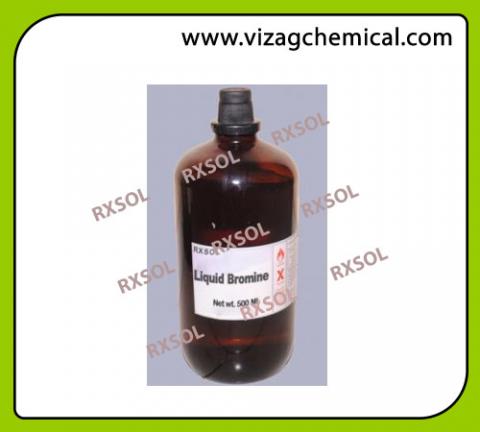
LIQUID BROMINE
Liquid Bromine – Properties, Uses, Applications & Industrial Supply
Liquid Bromine is a reddish-brown to dark red, volatile and highly reactive halogen widely used as an important industrial chemical and chemical intermediate. It is primarily utilized in water treatment, flame-retardant manufacturing, pharmaceuticals, agrochemicals, oilfield applications, chemical synthesis, and specialty chemical production.
Because of its strong oxidizing and reactive characteristics, Liquid Bromine requires specialized handling, storage, transportation, and safety procedures.
What is Liquid Bromine?
Bromine (Br₂) is a naturally occurring halogen element and one of the few elements that exists as a liquid under normal room-temperature conditions.
Liquid Bromine has a distinctive reddish-brown appearance and produces corrosive vapors. It reacts readily with many organic and inorganic substances, making it valuable for chemical synthesis and industrial processing.
Major Applications of Liquid Bromine
1. Water Treatment
Bromine chemistry is used in selected water-treatment and disinfection applications because bromine-based compounds can provide effective biocidal activity.
Bromine-based treatment systems are used in certain industrial water systems, cooling-water applications, swimming pools, and other controlled water-treatment processes.
2. Flame Retardants
One of the major industrial applications of bromine is the manufacture of brominated flame-retardant chemicals.
These compounds are used in selected plastics, polymers, textiles, electrical and electronic materials, and other applications where flame resistance is required.
3. Pharmaceutical Industry
Bromine is used as a chemical intermediate in the manufacture and synthesis of selected pharmaceutical compounds.
Its ability to participate in bromination reactions makes it valuable for producing specialized molecules used in pharmaceutical manufacturing.
4. Agrochemicals
Bromine compounds are used in the production of selected pesticides, herbicides, fumigants, and other agricultural chemicals.
The exact application depends on the bromine derivative and regulatory requirements applicable to the intended market.
5. Oilfield Applications
Bromine chemistry has applications in the oil and gas industry, including selected completion fluids, drilling-related chemicals, and specialty oilfield formulations.
Certain bromide salts are valued for their high density and chemical stability in demanding oilfield environments.
6. Chemical Manufacturing
Liquid Bromine is an important raw material and intermediate for producing numerous brominated organic and inorganic compounds.
It is used in controlled bromination processes in specialty chemical manufacturing.
7. Specialty Chemicals
Bromine is used in the manufacture of a wide range of specialty chemicals, intermediates, and bromide compounds used across different industrial sectors.
Liquid Bromine in Water Treatment
Bromine-based chemistry can provide effective microbial control in appropriately designed water-treatment systems.
Compared with some chlorine-based systems, certain bromine-based treatment programs can provide useful performance in specific water conditions. However, the actual treatment chemistry depends on the bromine source, water quality, pH, temperature, organic load, and treatment objective.
Professional water-treatment programs should therefore use the appropriate bromine compound and dosing system rather than adding elemental bromine directly without a validated treatment procedure.
Advantages of Bromine-Based Chemistry
Bromine offers several important chemical characteristics:
-
High chemical reactivity
-
Effective bromination capability
-
Strong oxidizing properties
-
Useful for chemical synthesis
-
Important intermediate for brominated compounds
-
Applications across multiple industrial sectors
-
Useful in selected biocidal and water-treatment systems
|
||||||||||||||
Properties
-
Chemical name: Bromine
-
Chemical formula: Br₂
-
CAS No.: 7726-95-6
-
Appearance: Reddish-brown to dark red liquid
-
Element: Halogen
-
Highly reactive
-
Volatile
-
Strong oxidizing and halogenating properties
-
Corrosive to many materials
-
Produces irritating and hazardous vapors